

 Home /
 Are Lithium Batteries More Environmentally Friendly Than Lead-Acid Batteries?


Table of Contents
- Lithium Batteries Are Gradually Replacing Lead-Acid Batteries
- Current Environmental Status of Lead-Acid Battery Industry
- Raw Material & Harmful Substance Comparison
- Pollution Source Analysis: Production Process Differences
- Recycling Rate & Industrial Maturity Contrast
- Final Summary & Industry Conclusion
Lithium Batteries Are Gradually Replacing Lead-Acid Batteries
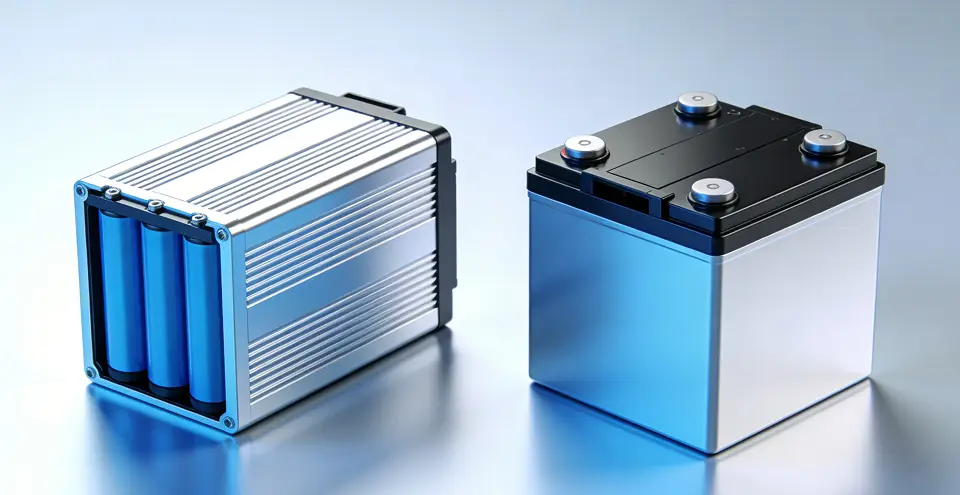
Lithium-ion batteries, with their higher energy density, greater environmental friendliness, and longer lifespan compared to lead-acid batteries, are rapidly replacing them. In the large-scale energy storage sector, many companies have also independently developed lithium-ion battery energy storage systems. Lithium-ion battery energy storage systems are environmentally friendly, and their replacement of lead-acid energy storage technology represents the future direction of the energy storage industry.
Are lithium-ion batteries more environmentally friendly than lead-acid batteries?
Current Environmental Status of Lead-Acid Battery Industry
After years of continuous development, my country’s lead-acid battery companies have basically formed their own system and are showing a rapid development trend. They have made significant breakthroughs in environmental protection. However, due to various reasons such as numerous manufacturers, small scale, serious pollution, and inconsistent quality, the pollution problems arising from the production process of lead-acid batteries have not been well resolved. In particular, a large number of small and medium-sized enterprises have extremely serious pollution problems during production, causing a significant negative impact on the entire electronics industry.
Raw Material & Harmful Substance Comparison
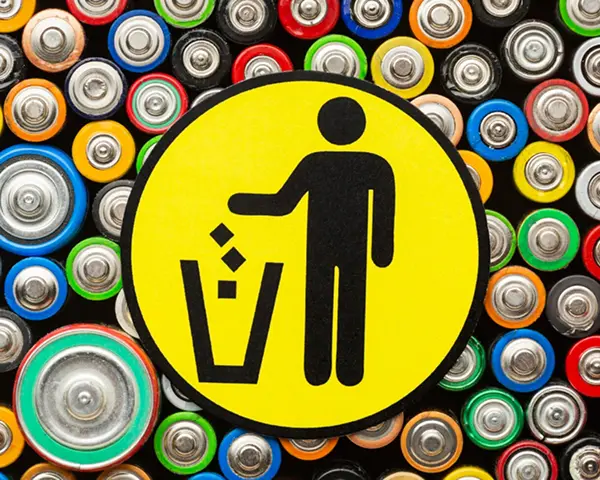
There are various ways to determine whether a product is more environmentally friendly than others. Lithium-ion batteries do not contain harmful substances, while lead-acid batteries do (e.g., they contain lead). Both types of batteries are recyclable; however, recycling lead-acid batteries used in UPS systems and electric vehicles is currently far less difficult than recycling large lithium-ion batteries in most parts of the world.
Pollution Source Analysis: Production Process Differences
Lead-acid battery pollution primarily occurs during the production process. Lead-containing heavy metal wastewater is generated during coating and battery cleaning processes, and various lead-containing fumes and dust are produced during grid casting, alloy preparation, lead parts manufacturing, and aluminum powder production.
However, a comprehensive analysis of the environmental impact requires consideration of the overall carbon footprint over the battery’s lifespan.
Four Key Links of Carbon Footprint
The carbon footprint accumulates throughout the product’s life cycle:
- Raw material extraction
- Energy consumption for production and transportation
- Operating energy consumption required for battery charging and cooling
- Reusability and land impact during disposal

Operating Energy Consumption & Charging Efficiency Comparison
Previous analyses have shown that, to date, operating losses (i.e., the energy consumption required for battery charging) are the primary factor contributing to the carbon footprint of UPS systems and their battery systems over their 10-year lifespan. However, there is no significant difference in operating losses between the two battery systems; which battery system is superior depends on the specific application.
Lithium-ion batteries require less energy to charge than lead-acid batteries. The charge cycle efficiencies of lithium-ion batteries and lead-acid batteries are 90% and 80-85%, respectively. Furthermore, lead-acid batteries have a higher self-discharge rate than lithium-ion batteries. However, lithium-ion batteries require a battery management system (BMS) to prevent short circuits and overcharging, thus offsetting these efficiency gains. This monitoring system consumes energy. Therefore, the overall operating losses are remarkably similar for both.
Recycling Rate & Industrial Maturity Contrast
Besides determining the dominant factors in 10-15 year carbon footprints, other factors must be considered because both have largely their own advantages and disadvantages. Lithium-ion batteries can be considered “more environmentally friendly” considering they contain materials that can be safely landfilled and are recyclable, and because their lifespan is 2-3 times longer than lead-acid batteries.
However, it should be noted that lead in lead-acid batteries has a 99% lead recycling rate, with over 90% of the batteries collected (this is North American data; Europe and Japan have similar rates). However, the recycling and reuse of lithium-ion batteries is far less mature, especially for large lithium-ion batteries (such as those used in electric vehicles and data center UPS systems). From a technological upgrade perspective, lithium batteries have advantages such as high energy density, long lifespan, and environmental friendliness. With the further development of the battery industry, they are bound to replace lead-acid batteries; this is the industry’s development trend. Economically, considering the entire battery lifecycle, lithium batteries have a longer lifespan, and their average usage cost is not much higher than that of lead-acid batteries.
Regardless, lithium batteries will still cause some pollution, just relatively less. We all live on the same planet, and we must start with ourselves to be conscious of our actions. Furthermore, used batteries should not be mixed with other types of household waste; they must be disposed of separately. The recycling of used batteries has been a long-standing call. Dry cell batteries generally contain heavy metals, which are toxic and seriously damage the environment and harm human health.
People need to develop an environmental awareness. Only when everyone does this will there be an impact, and related environmental protection industries will actively develop. Lithium battery manufacturers not only need to focus on the purification and treatment of process waste during production, but also need to greatly improve their pollution prevention technologies after the batteries are disposed of.
Final Summary & Industry Conclusion
In summary, compared to traditional lead-acid batteries, lithium batteries have many advantages such as small size, light weight, high operating voltage, high specific energy, long cycle life, no pollution, and good safety performance. Therefore, as lead-acid battery production becomes unsustainable, lithium batteries will benefit more from this round of environmental inspections and stand out, becoming a hot-selling battery product in the market.